French drain installation in Salisbury has become increasingly common as homeowners deal with waterlogged gardens, damp foundations, and persistent surface water pooling. While many drainage issues initially appear to be blocked drains in Salisbury, the root cause is often poor ground permeability or inadequate subsurface drainage.
Understanding how a French drain system works — and when it is the right solution — helps property owners make informed decisions before problems escalate into structural damage requiring wider drain services in Salisbury.
What Is a French Drain?
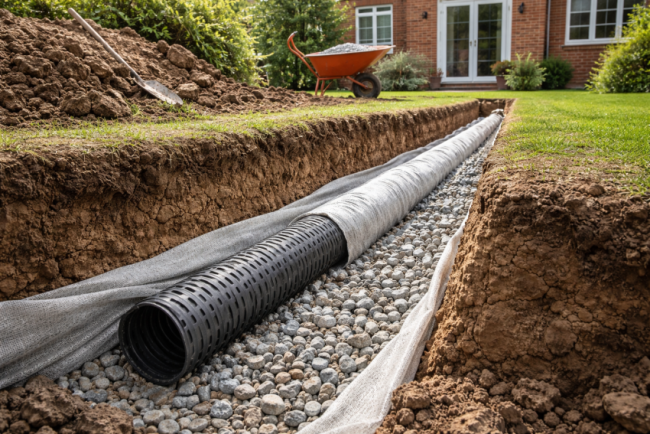
A French drain is a subsurface drainage system designed to redirect groundwater away from buildings, lawns, patios, and driveways. It consists of a perforated pipe laid inside a gravel-filled trench, allowing water to enter and flow safely toward a suitable discharge point.
Unlike emergency drain jetting in Salisbury, which clears blockages inside pipework, a French drain is a preventative system that manages groundwater movement before it causes damage.
Why Salisbury Properties Need French Drain Installation
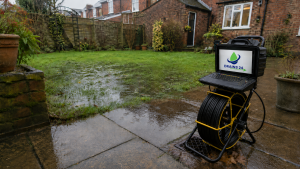
Salisbury’s soil composition plays a major role. Many residential areas sit on clay-heavy ground that drains slowly. As a result, properties experience:
- Persistent soggy lawn areas
- Surface water collecting near foundations
- Damp internal walls
- Increased hydrostatic pressure against brickwork
- Overflowing external gullies
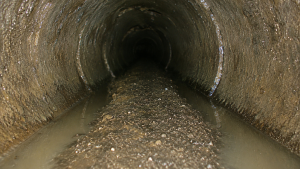
Homeowners often assume they need CCTV drain surveys in Salisbury to locate a blockage. However, inspections frequently show that the pipework is clear — the issue is inadequate ground drainage rather than internal obstruction.
In these cases, French drain installation becomes the long-term solution.
How Deep Should a French Drain Be?
Depth varies depending on purpose:
• Garden surface water control: 300–450mm
• Foundation protection: 600–900mm
• Structural perimeter drainage: deeper with reinforced gravel base
Correct fall gradient is critical. Even the best installation will fail if water cannot discharge correctly.
Before installation, assessment of surrounding drainage infrastructure — including any soakaway installation in Salisbury — is important to ensure systems work together rather than overload one another.
French Drain Pipe Types Explained
Choosing the correct pipe is essential for longevity and performance.
Perforated Land Drain Pipe
Flexible and commonly used for garden applications.
Rigid Perforated PVC Pipe
More suitable for structural perimeter drainage.
Filter-Sleeved Pipe
Wrapped in geotextile membrane to prevent silt ingress — particularly important in clay-rich Salisbury soil.
In older properties with pitch fibre drainage repairs in Salisbury, upgrading surrounding ground drainage can reduce stress on ageing pipe systems.
French Drain Installation Process
Professional French drain installation in Salisbury typically includes:
- Site and ground level assessment
- Setting correct gradient
- Excavation of trench
- Installation of geotextile membrane
- Placement of perforated pipe
- Surrounding with clean angular gravel
- Wrapping and controlled backfill
Poor workmanship can result in collapse, silting, or ineffective discharge. This is why installation should be approached as part of a wider drainage strategy rather than a standalone garden project.
French Drain vs Soakaway: Which Is Better?
A French drain redirects water away from an area.
A soakaway installation in Salisbury stores and disperses water into surrounding soil.
In many cases, the most effective solution is a combined system — redirecting water via French drain into a properly sized soakaway.
Compliance with drainage legalities in Salisbury is important, particularly when altering discharge routes near property boundaries.
Signs You May Need French Drain Installation
You may require a French drain if you experience:
- Repeated external flooding despite clear pipework
- Water pooling even after drain jetting in Salisbury
- Damp patches along exterior walls
- Garden subsidence or erosion
- Water entering garages or basements
If symptoms persist after clearing internal drains, structural ground drainage should be assessed.
Cost of French Drain Installation in Salisbury
Costs vary depending on:
- Length and depth of trench
- Soil condition
- Access limitations
- Discharge solution required
- Integration with existing drainage
A professional assessment ensures accurate pricing and avoids unnecessary excavation.
Why Professional Assessment Matters
French drain installation should not be treated as a simple landscaping task. Without proper evaluation, homeowners risk:
- Redirecting water toward neighbouring properties
- Overloading surface water systems
- Failing to comply with local drainage regulations
- Masking deeper structural issues
Where uncertainty exists, CCTV drain surveys in Salisbury can confirm whether the issue is ground-related or pipe-related before installation proceeds.
FAQs
What is a French drain used for?
A French drain redirects groundwater away from buildings and waterlogged areas using a perforated pipe and gravel trench system.
How long does a French drain last?
When installed correctly with membrane protection, it can last decades with minimal maintenance.
Do French drains work in clay soil?
Yes, but correct depth, pipe type, and discharge design are critical in clay-heavy Salisbury ground.
Can I install a French drain myself?
Small garden versions are possible DIY projects, but foundation protection systems should be professionally installed.
Does a French drain need maintenance?
Periodic inspection ensures gravel and outlets remain clear of debris or silt.