Clay drain pipe repairs in Salisbury may be needed when older underground pipework starts cracking, moving or letting roots into the system. Many homes around Salisbury and nearby villages have older drainage runs, especially where properties have been extended, altered or connected to older pipe layouts over time.
A clay drain can work well for many years. However, once a joint opens, a pipe cracks or a section moves, the same drain may begin blocking, smelling or holding water. That is when the problem needs more than another quick clear.
Salisbury Drains24 helps homeowners, landlords and local businesses understand whether a blockage is simple waste build-up or a sign of damage inside the pipe. A proper check can help decide whether drain unblocking, CCTV inspection, root removal or targeted drain repairs are needed.
Why clay drain pipe repairs Salisbury properties need can be hard to spot
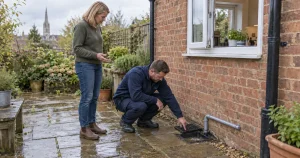
Clay drains sit underground, so most problems stay hidden until symptoms appear above ground. A pipe may crack below a driveway, garden, patio or older extension without leaving an obvious surface sign at first.
In many cases, the drain still works for a while. Water may pass through the pipe, but waste starts catching on a rough joint or damaged edge. Over time, the same section blocks again and again.
This is why clay drain pipe repairs in Salisbury often start with investigation. The repair should match the real fault, not just the symptom seen at the surface.
Common signs of damaged clay drain pipes
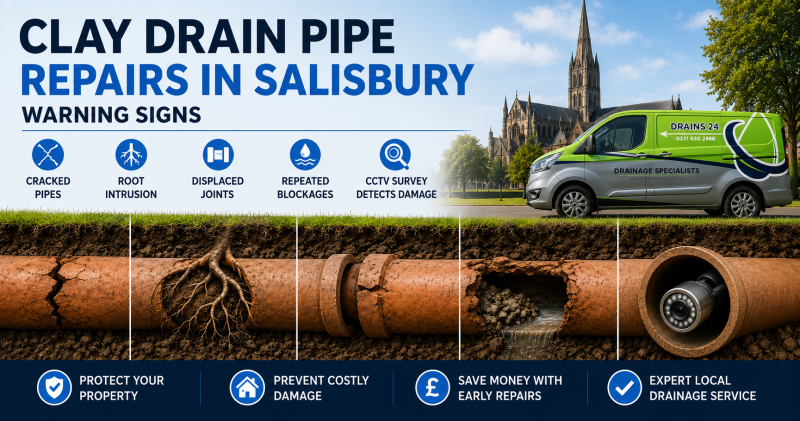
Damaged clay drains can show several warning signs. Some are easy to notice, while others build slowly.
- The same drain blocks more than once.
- Water drains slowly even after clearing.
- Outside gullies overflow during normal use.
- Bad smells return near toilets, sinks or inspection chambers.
- Gurgling sounds come from drains or toilets.
- Wet patches appear in the garden or driveway.
- Ground dips, cracks or sinks near the drain run.
- Tree roots keep entering the pipe.
These signs do not prove the clay pipe has failed. However, they do suggest the drain needs a closer look.
Cracked clay pipes
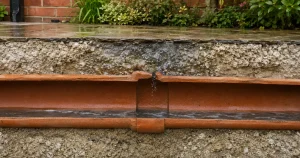
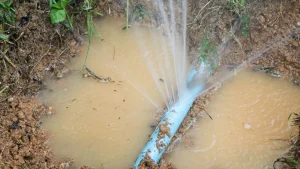
Clay pipes can crack because of age, ground movement, pressure from above, poor bedding, nearby roots or earlier disturbance. A small crack can let water escape into the surrounding ground. It can also let soil and fine material enter the pipe.
Once the pipe wall weakens, waste may begin catching at the damaged section. If the crack grows, the drain can lose shape or collapse in that area.
Early investigation helps prevent a small defect becoming a larger repair.
Displaced joints in older drains
Clay drains usually connect in sections. If a joint moves out of line, it can create a lip inside the pipe. Waste catches on that lip as it flows past.
This type of fault often causes repeat blockages. The drain may clear after jetting, but the joint still catches waste, wipes, paper, grease or silt again later.
A displaced joint can also let roots enter the pipe. Once roots find moisture, they can grow quickly inside the drain.
Tree root damage in clay drains
Tree roots are one of the most common causes of repeat clay drain problems. Roots do not need a large opening. They can enter through small cracks, loose joints or weak seals.
Once inside, roots catch waste and slow the flow. Jetting or cutting can clear the immediate blockage, but roots may return if the entry point stays open.
Where roots keep coming back, root removal may need to be followed by repair work. Otherwise, the same problem can continue.
Why a simple blockage may point to a repair issue
Not every blocked drain needs repair. Grease, wipes, leaves, food waste and silt can all block a healthy pipe. Once cleared, the drain may return to normal.
The warning sign is repetition. If the same section blocks again, something inside the pipe may be catching waste or holding water.
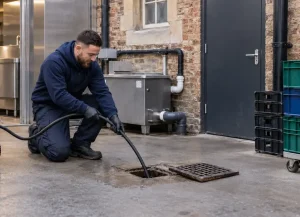
For immediate problems, drain unblocking can restore flow. If the blockage returns, the next step should usually be a proper inspection.
How CCTV surveys help confirm clay pipe damage
A CCTV survey allows an engineer to inspect the inside of the pipe without guessing. The camera can show cracks, displaced joints, root entry, scale, silt, standing water or partial collapse.
For clay drains, this is especially useful because several faults can create similar symptoms. A slow drain may come from grease, roots, a moved joint or a low section. The correct repair depends on the actual cause.
A CCTV drain survey can also help locate the problem accurately, which reduces unnecessary digging.
Repair options for clay drain pipes
The right repair depends on the pipe condition, access and damage level. Some clay drain faults can be repaired locally. Others need a longer section restored or replaced.
Possible repair options include:
- Patch repair for a localised crack or open joint.
- CIPP lining where the pipe shape and condition allow it.
- Root cutting followed by repair of the entry point.
- Excavation where the pipe has collapsed or moved badly.
- Replacement of short damaged sections where lining is not suitable.
For drainage work involving pipe layout, inspection chambers or building-related drainage, GOV.UK’s Approved Document H gives useful background on drainage and waste disposal requirements in England. It is a helpful reference where clay drain repairs connect with inspection access, manholes, pipe runs or property alterations.
When excavation may be needed
Excavation is not always needed, but sometimes it is the safest and most reliable option. If a clay pipe has collapsed, dropped badly or broken apart, lining may not be suitable.
In those cases, the damaged section may need to be dug out and replaced. A CCTV survey can help confirm whether excavation is necessary and where the repair should take place.
Good investigation helps limit disruption because the team can target the damaged section rather than opening up more ground than needed.
How Salisbury properties can reduce future clay drain problems
Some clay drain problems come from age and ground conditions, so they cannot always be prevented. However, good habits can reduce pressure on the system.
- Keep fat, oil and grease out of sinks.
- Only flush toilet paper.
- Keep outside gullies clear of leaves and silt.
- Arrange checks if the same drain blocks twice.
- Act quickly if roots keep returning.
- Use CCTV before major landscaping, extensions or driveway works near drains.
These steps help protect the pipework and make it easier to catch small faults before they grow.
Clay drain pipe repairs need the right diagnosis
Older clay drains can fail slowly. A cracked pipe, moved joint or root entry point may cause small warning signs before it becomes a serious blockage or collapse.
Salisbury Drains24 can help identify whether the problem needs drain unblocking, CCTV inspection, root removal or targeted drain repairs. The aim is to find the cause, explain the options clearly and avoid repeated disruption where possible.
If the same drain keeps blocking, smells return or water does not clear properly, it is worth checking whether the clay pipe itself needs attention.
FAQs
How do I know if my Salisbury clay drain pipe is damaged?
Warning signs include repeated blockages, slow drainage, bad smells, overflowing gullies, gurgling sounds, wet ground or roots entering the pipe. A CCTV survey can confirm the condition of the clay drain.
Can clay drain pipe repairs be done without digging?
Sometimes. Patch repairs or lining may be suitable for local cracks or joints if the pipe shape allows it. Excavation may be needed if the pipe has collapsed, dropped badly or broken apart.
Why do roots enter clay drain pipes?
Roots look for moisture and can enter through cracks, loose joints or weak seals. Once inside, they catch waste and can cause repeat blockages.
Can jetting fix a cracked clay pipe?
No. Jetting clears waste and debris, but it does not repair cracks, displaced joints or root entry points. If the pipe is damaged, repair work may still be needed.
Should I get a CCTV survey before repairing a clay drain?
Yes. A CCTV survey helps confirm the fault, location and repair options before work begins. It can reduce guesswork and help avoid unnecessary digging.