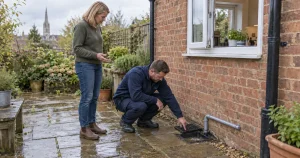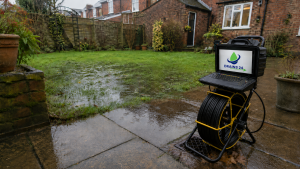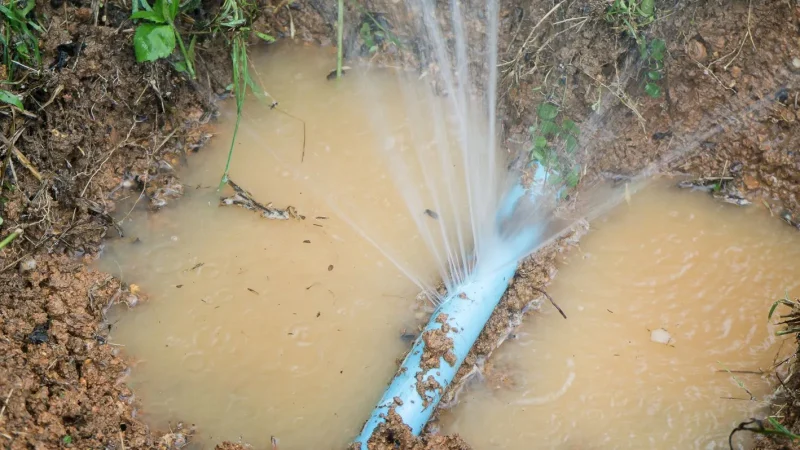
A water leak or drain problem can leave the same clue: a wet patch that keeps returning in a garden, beside a driveway or close to a path. However, the source matters. A private water supply pipe carries clean water towards the property, while a drain carries wastewater away. Rainwater systems create a third possibility, especially when the ground only becomes wet after a downpour.
You cannot always identify the faulty pipe from the surface. Even so, timing, smell, pressure and meter readings can narrow the cause.
Start with when the wet patch appears
First, think about the weather and water use.
If the patch stays wet through several dry days, a leaking supply pipe or foul drain becomes more likely. By contrast, water that appears during heavy rain and then slowly clears may come from a rainwater gully, downpipe, land drain or soakaway.
Next, note whether the area becomes wetter when people use sinks, toilets or showers. A damaged drain may leak more as the property sends waste through it. A clean-water supply leak, on the other hand, may continue when nobody uses water inside.
These clues do not prove the cause. Water can travel through soil and appear away from the damaged pipe. Therefore, avoid digging where the surface looks wet. Other buried services may also run through the area.
Signs that point towards a private water supply leak
The private supply pipe brings mains water from the boundary to the building. A crack or failed joint may leak continuously below ground.
Several signs together can point towards an underground water pipe leak:
- one area stays damp during dry weather;
- water seeps through paving joints without recent rain;
- the ground feels soft or starts to sink;
- water pressure drops at several taps;
- the water meter records use while every tap and appliance remains off;
- metered water use rises without an obvious reason;
- you can hear water moving when the property is quiet.
Low pressure alone does not confirm a leak. Network work, a partly closed stop tap or an internal plumbing fault can also reduce flow. Still, low pressure with wet ground and unexplained meter movement needs a proper check.
The Consumer Council for Water explains how to check for a private supply leak. Its guidance says meter movement may point to an outside supply-pipe leak when all water-using appliances and the inside stop valve are off. Only check a meter if you can reach it safely. Never lift a heavy metal cover or climb into a chamber.
Signs that point towards a damaged drain
A drain fault often behaves differently because the pipe carries water during use or when rain enters it.
Look for a group of signs rather than relying on one symptom:
- the wet area develops after toilets, showers or sinks have been used;
- a foul or stale smell comes from the ground, gully or chamber;
- toilet levels change or nearby fixtures drain slowly;
- an outside gully backs up;
- an inspection chamber holds unusually high water;
- the problem returns after engineers clear a blockage;
- the ground becomes wet beside a known drain route.
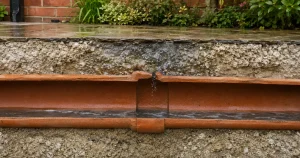
A cracked joint, displaced pipe or broken section can let wastewater escape. Yet a blockage can also force water back through a gully or chamber without a leak. Therefore, engineers should check both flow and pipe condition before recommending a repair.
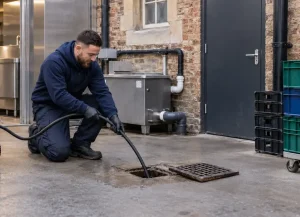
A CCTV drain survey can show cracks, open joints, roots, movement and collapsed sections inside a drain. It cannot inspect a pressurised drinking-water supply pipe. If the evidence points towards wastewater, Salisbury Drains24 can carry out a professional drain repair check and advise on the right next step.
Could rainwater be causing the wet ground instead?
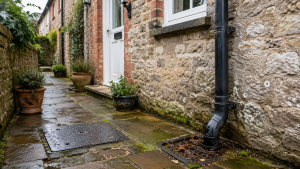
Rainwater can collect when a gully blocks, a downpipe connection fails or a soakaway no longer clears water well.
Rainwater becomes more likely when:
- the patch only appears during or after rain;
- water gathers below a downpipe or beside a rainwater gully;
- the area improves after several dry days;
- there is no foul smell;
- taps keep their normal pressure;
- the water meter stays still when the property uses no water.
Rain can also hide a supply leak. If the patch remains after nearby ground dries, arrange a check.
Water supply leak, drain fault or rainwater problem?
| Clue | Private water supply leak | Damaged foul drain | Rainwater or surface-water problem |
|---|---|---|---|
| Appears in dry weather | Often | Possible | Less likely |
| Changes with tap or toilet use | May continue steadily | Often becomes worse | Usually no |
| Low pressure at several taps | Possible | Unlikely | Unlikely |
| Meter moves with water use stopped | Possible | No | No |
| Foul smell | Unlikely | Possible | Usually no |
| Follows heavy rain | May become harder to spot | Possible | Common |
| Gully or chamber backs up | Unlikely | Possible | Possible |
| Best professional check | Supply-pipe and leak check | Flow check and CCTV survey | Gully, downpipe and surface-water check |
Safe checks you can make before calling
Photograph the wet area and record when it appears. Then compare it after rain, during a dry spell and after normal water use.
Check whether several taps have lost pressure. If your water company provides safe meter-test instructions, follow them exactly. Meanwhile, keep people away from soft or sunken ground.
Do not remove a heavy chamber cover, touch wastewater or use rods without knowing the pipe layout. Never excavate near an unknown pipe route because other services may share the area.
When you call, explain how long the ground has stayed wet and whether rain or water use changes it. Mention smells, slow drains, pressure or meter changes and nearby gullies or chambers. This helps the engineer choose the right first checks.
Why finding the source matters before repair work starts
Each system needs a different check. A drain engineer may test flow and use a CCTV camera. By comparison, a clean-water leak check focuses on the pressurised supply pipe.
Clearing a gully will not stop a leaking supply pipe, while a supply-pipe repair will not solve a damaged drain joint.
Salisbury Drains24 provides private water main repairs in Salisbury as well as drain checks and repairs. The team can assess the visible signs, work out which system needs attention and explain whether the next step involves private-side work or the water company.
Who may have responsibility for the pipe?
Responsibility depends on pipe type, position and the properties served.
For drinking water, the water company normally looks after the public main and communication pipe towards the boundary. The owner usually looks after the private supply pipe from that boundary to the building. Ask the water company about shared supplies or unusual layouts.
Drain responsibility follows different rules. A pipe serving one property within its boundary may remain private, while the water company may look after shared lateral drains and public sewers. Ask before arranging work if responsibility remains unclear.
When the problem needs urgent attention
Act promptly if water flows quickly, pressure drops suddenly or the ground starts sinking. Also seek urgent help if wastewater reaches the surface or creates an electrical risk.
Keep people away from the area. For a suspected supply burst, follow your water company’s stop-tap advice. Avoid wastewater and stop using connected fixtures if that reduces an overflow.
Arrange the right Salisbury pipe check
Unexplained wet ground does not always mean a drain has failed. A supply leak, damaged foul drain and rainwater fault can look similar. However, timing, pressure, smell and meter behaviour can point the check in the right direction.
If you cannot identify the source safely, contact Salisbury Drains24. The team can assess whether you need a water-supply check, drain survey or other drainage work.
Frequently Asked Questions
Can a leaking drain make part of a garden stay wet?
Yes. A cracked or open drain joint can let wastewater escape into the surrounding ground. However, rainwater and private supply-pipe leaks can create a similar wet patch, so engineers should confirm the source before repair work starts.
Does low water pressure always mean the supply pipe leaks?
No. A network issue, stop-tap position or internal plumbing fault can also reduce pressure. A supply leak becomes more likely when low pressure appears with unexplained meter movement or wet ground during dry weather.
How can I check for a private water supply leak?
Follow your water company’s meter-test guidance and only open a light, safe-to-reach meter cover. Never lift a heavy metal cover. If the meter moves while every water-using appliance and the inside stop valve are off, contact the water company or a suitable repair specialist for advice.
Can a CCTV drain survey find a leaking water main?
No. A CCTV camera travels through a drain and shows faults inside that wastewater pipe. It does not check a pressurised clean-water supply pipe, which needs a different form of assessment.
Who repairs the private water supply pipe?
The property owner usually has responsibility for the private supply pipe between the boundary and the building. The water company normally looks after the public main and communication pipe. Ask the water company to confirm responsibility when the route or boundary remains unclear.