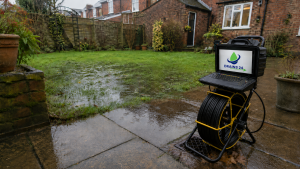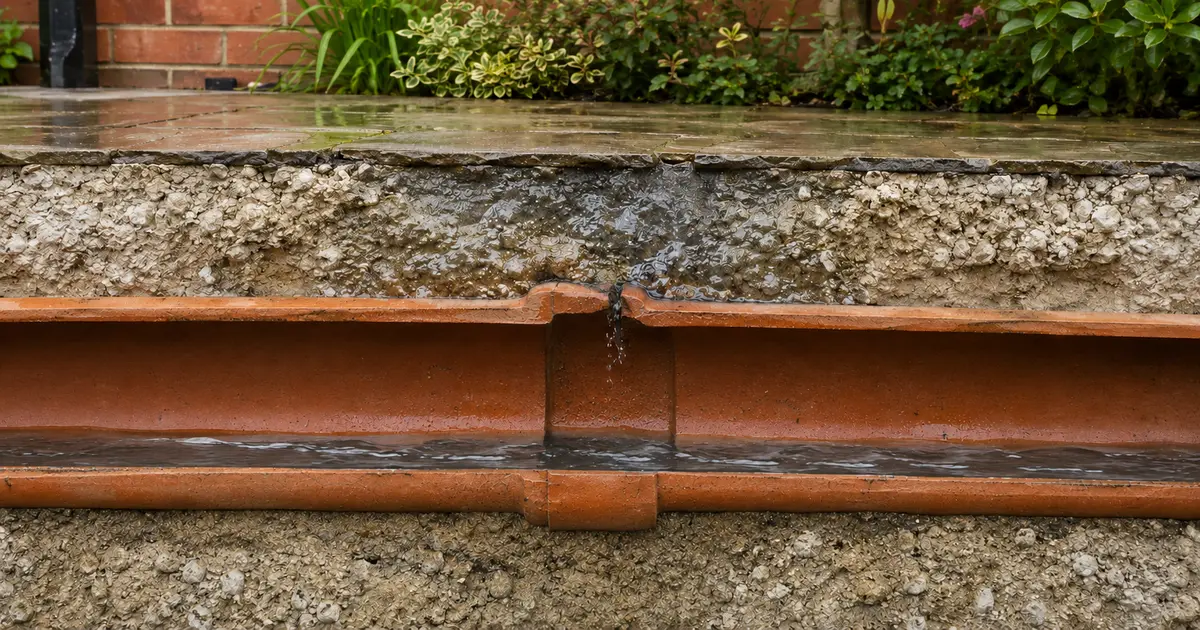
A drain that stays unusually full after the rain has stopped does not always contain a blockage. In parts of Salisbury and the surrounding chalk valleys, groundwater can enter damaged drains through cracks, open joints and gaps around inspection chambers.
This extra water may keep flowing after the weather improves. It takes up space inside drains and can increase the risk of backing up.
However, a high water level can also point to a blockage or a problem farther along the system. Homeowners should therefore confirm the cause before paying for repeated drain clearance or repairs.
What is groundwater infiltration in Salisbury drains?
Groundwater sits below the surface in soil and rock. After long periods of rain, the water table rises slowly as water moves through the ground.
The Environment Agency’s groundwater flooding guidance explains that chalk areas face a greater risk. It also notes that groundwater problems can start well after heavy rain and last for weeks or months.
Salisbury Plain and several nearby valleys sit over water-bearing chalk. Therefore, local groundwater can remain high even after roads, roofs and patios look dry.
A sound drain should keep surrounding groundwater outside. Yet an older or damaged pipe may let water enter through:
- Cracks in clay, concrete or pitch-fibre pipework.
- Open or displaced pipe joints.
- Gaps around pipe connections.
- Damaged chamber walls or benching.
Wessex Water calls this process groundwater infiltration. Its local Tilshead sewer-sealing project describes water entering pipes through cracks, holes and gaps when the water table rises.
Is this the same as a failing soakaway?
No. Both problems may appear during a long wet spell, but they affect different parts of the drainage system.
A soakaway takes roof or surface water and lets it spread into the ground. When the soil cannot accept it, signs usually appear above ground through overflowing gullies, soggy lawns or flooded paving.
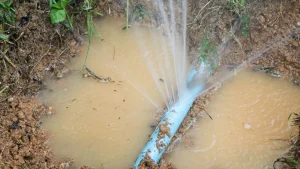
Groundwater infiltration works in the opposite direction. Water already in the surrounding ground enters a damaged pipe. The garden may look normal while an inspection chamber or drain remains unusually full.
Our guide to soakaway problems in Salisbury gardens covers rainwater that cannot disperse properly. This article deals with water entering foul or surface-water pipes through faults in the drainage system.
Signs that groundwater may be entering a drain
No single symptom proves infiltration. Even so, the pattern of the problem can provide useful clues.
Possible signs include:
- A chamber level that remains high after the household stops using water.
- Clear or lightly coloured water continuing to move through a foul drain.
- Several drains becoming slow during wet periods.
- The problem easing after several dry weeks.
- Water entering through a visible chamber wall or pipe joint.
- Normal flow in dry months but repeated trouble during wet winters.
Silt can also enter through a broken joint or damaged chamber. Our article about silt in Salisbury drains explains when repeated deposits may point to pipe damage.
Never enter an inspection chamber or lean into a deep opening. Drain gases, unstable covers and contaminated water create serious risks.
Why the drain can stay full after the rain stops
Surface runoff responds quickly. It flows from roofs and paving during a shower, then falls away when the rain ends.
Groundwater behaves differently. Rain must soak through the soil and recharge the chalk below. The water table may continue rising after the clouds clear. Once high, it can also fall very slowly.
That delay explains why a drain may remain full several days later, even though the same property has no problem during a dry summer.
Could it still be a normal blockage?
Yes. A high chamber level often results from a restriction downstream rather than water entering from the ground.
Common alternatives include:
- Waste or roots restricting the pipe.
- A collapsed or badly deformed drain.
- Heavy silt reducing the space inside the pipe.
- A public sewer problem beyond the property boundary.
If water rises sharply when someone flushes, the drain may have a blockage. Continuous flow while the property uses no water makes infiltration or another incoming connection more likely. However, only a proper check can confirm the cause.
It is also worth asking immediate neighbours whether they have the same problem. Several homes affected together may point to the shared or public network.
How can an engineer check for groundwater infiltration?
Check levels and flow
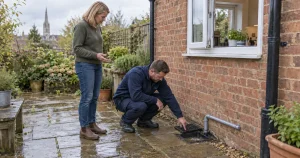
An engineer can compare accessible chambers while household taps, toilets and appliances remain unused. A steady incoming flow may show that water enters from another source.
Clear genuine restrictions first
Silt or waste can hide cracks and joints. The engineer may need to restore flow before examining the pipe, although clearance will not seal an infiltration point.
Use CCTV where conditions allow
A CCTV drain survey in Salisbury can show open joints, fractures, displaced pipes and water entering through defects.
Nevertheless, high or dirty water may obscure the lens. The engineer may need to clean the line or return when levels fall.
Trace the route
Older properties do not always have an accurate drainage plan. A sonde, dye test and checks at separate chambers can help establish where a pipe runs and whether it joins a private or public system.
Why repeated jetting will not solve infiltration
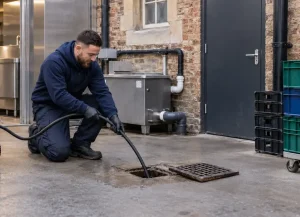
Drain jetting removes loose silt, waste and some root material. However, it cannot close a crack or reseal an open joint. Repeated clearance without checking the pipe can therefore waste money and delay the right repair.
What repairs may stop groundwater entering?
The right repair depends on the pipe material, fault, access and overall condition.
Options may include:
- A local patch repair over one sound, isolated defect.
- Drain lining across several leaking joints or cracks.
- Sealing around a chamber connection.
- Repairing damaged chamber walls or benching.
- Excavating and replacing a badly collapsed or misshapen section.
Our guide to clay drain pipe repairs in Salisbury explains the checks and repair choices for older pipework.
No-dig work suits many pipes, but severe deformation, collapse or poor access may require excavation. A survey should guide the repair. You can also read about our Salisbury drain repair service.
Who deals with the problem: the homeowner or Wessex Water?
Responsibility normally depends on where the defect sits and which properties the pipe serves.
The homeowner usually looks after a private drain that serves only their property within its boundary. Wessex Water normally deals with public sewers and many shared pipes. Its blocked-drain guidance says it clears faults on its network, while customers remain responsible for their own pipework.
Drain layouts vary, particularly at older or divided properties. Our guide to responsibility for pipes and sewers in Salisbury provides a fuller starting point.
Report the issue to Wessex Water when several properties suffer together or the evidence points beyond the private drain. If the fault sits within private pipework, a drainage contractor can check and repair it.
When should you arrange a drainage check?
Arrange a check when the drain stays high after clearance, the problem returns in wet weather or water enters through a joint or chamber wall.
Act sooner if wastewater backs up towards toilets, showers or low-level gullies. Stop using washing machines, dishwashers and other high-flow appliances until you know the drain can carry the extra water.
If you cannot tell whether the wet area comes from a supply pipe or a drain, our guide to water leaks and drain problems in Salisbury explains the first safe checks.
Salisbury Drains24 can check private drainage across Salisbury, Amesbury, Wilton, Laverstock, Old Sarum, Harnham and nearby villages. We can clear restrictions, survey pipes and advise on proven faults.
For advice or a booking, call 01722 703565. For urgent wastewater backing up towards the property, call 07511 181 177.
Frequently asked questions
Is groundwater in a drain the same as a blockage?
No. A blockage stops normal flow, while infiltration adds groundwater through a crack, open joint or damaged chamber. A drain can have both problems at the same time.
Why does the drain stay full when it has stopped raining?
Groundwater moves slowly through soil and chalk. The water table may continue rising after rainfall ends and can remain high for weeks.
Can a CCTV survey find groundwater entering a drain?
Sometimes. CCTV can show water entering through cracks, joints and chamber connections. However, high or dirty water may hide the pipe wall, so the engineer may need to clean the line or return when levels drop.
Will drain jetting stop groundwater infiltration?
No. Jetting can remove silt and waste, but it cannot seal structural gaps. The pipe or chamber needs a suitable repair if water enters through a defect.
Who is responsible for groundwater entering a drain?
The answer depends on the pipe. Homeowners usually handle private drains serving only their property. Wessex Water normally handles public sewers and many shared drainage runs.
Should I pump water from a drain myself?
No. Pumping contaminated drain water onto land, into a road gully or towards a watercourse can create health and pollution risks. Ask the correct drainage authority or contractor to assess the problem.