Commercial drain unblocking in Salisbury becomes urgent when a blockage threatens trading, hygiene or safe access. A blocked business drain can stop a restaurant kitchen, close customer toilets, affect neighbouring units or leave wastewater near stock and food areas.
Commercial sites also place very different demands on their drains. A busy café may send hundreds of sink and dishwasher discharges through its waste pipes in one day. A shopping centre may have several tenants, shared toilets and long drainage runs. Meanwhile, a hotel, school, care home or office cannot simply stop people using every washroom without a clear plan.
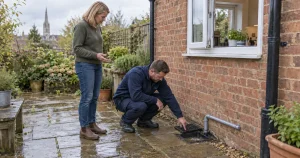
For that reason, commercial drain unblocking in Salisbury needs a practical response. The first aim is to protect people and limit the affected area. The next is to find the blockage, restore safe flow and decide whether the site needs any further checks.
Why commercial drain unblocking in Salisbury needs a different response
At home, one blocked sink may affect a single room. At commercial premises, the same fault can disrupt staff, customers, deliveries and several businesses at once.
The layout may also make the job harder. Commercial drains often include:
- Several kitchens or washrooms feeding one main run.
- Floor gullies, grease units and service-yard drains.
- Shared pipework beneath common areas.
- Access covers inside stores, kitchens or locked plant areas.
- Older sections joined to newer fit-out pipework.
- Long routes between the building and the public sewer.
A quick clearance matters, but speed alone does not solve every case. The engineer also needs to confirm which part of the system has failed and whether the drain flows properly before the site returns to normal use.
A local issue across Salisbury’s varied business areas
Salisbury combines historic commercial buildings, modern retail space, busy food premises and out-of-town business sites within a fairly compact area.
The city centre has restaurants, pubs, cafés, shops and visitor businesses around the High Street, Market Place, Butcher Row and Fisherton Street. Salisbury City Council also runs the Charter Market in Market Place every Tuesday and Saturday, which adds regular trading activity to the heart of the city.
Multi-unit sites create a different challenge. Old George Mall combines shops with food and drink businesses, while Cross Keys Shopping Centre includes retailers, eateries and office space. A blockage at any shared commercial setting may appear in one unit even though the cause sits farther along a common pipe.
Larger premises also operate around Southampton Road, Churchill Way West, Churchfields and the Old Sarum business areas. These sites may have loading yards, staff facilities, large roof areas or long private drainage runs. Therefore, the engineer needs accurate access details rather than just a postcode.
These examples describe Salisbury’s mix of premises; they do not suggest that Drains24 has worked for any named venue or centre.
What commonly blocks commercial drains?
The likely cause changes with the way a building operates.
| Type of premises | Common blockage material or fault | Useful first check |
|---|---|---|
| Restaurants, cafés and pubs | Fat, oil, grease, food scraps and scale | Check sinks, floor gullies, grease equipment and the first outside access point |
| Shopping centres and multi-unit retail | Washroom waste, wipes, shared-run build-up and litter in outside channels | Find out whether one unit or several units have lost flow |
| Hotels, schools and care homes | High toilet use, wipes, paper products and repeat misuse | Identify which floor, wing or washroom group shows the first signs |
| Salons, gyms and leisure sites | Hair, soap, product residue and heavy shower use | Stop the affected showers or basins and check nearby traps |
| Offices and public buildings | Toilet blockages, wipes and low-use pipes that collect scale | Check whether staff and public facilities join the same run |
| Workshops, warehouses and yards | Silt, leaves, packaging debris or damaged outside drains | Check channels and gullies without lifting heavy covers |
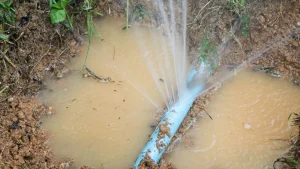
Sometimes, the blockage only reveals another fault. Roots may enter a failed joint, a pipe may have dropped, or a broken section may collect waste at the same point. As a result, a site that needs clearance again and again often needs more than stronger jetting.
What should staff do first?
Good first steps can reduce the damage before an engineer arrives.
1. Stop using the affected drainage
Turn off dishwashers, glasswashers, washing machines and other appliances that discharge into the blocked run. Ask staff not to use affected sinks or toilets. Extra water can turn a slow drain into an overflow.
2. Keep people away from wastewater
Close the smallest safe area around any overflow. Use proper barriers and follow the site’s cleaning and safety procedures. Do not let customers or staff walk through contaminated water.
3. Protect food and stock
If sewage or drain water reaches a food room, stop work in that area and separate anything that may have come into contact with it. The Food Standards Agency advises food businesses to keep food waste out of sinks and use suitable grease control to help prevent wastewater backing up into kitchens. Its guidance for starting and running a food business safely gives a useful official reference point.
Do not guess whether affected food or packaging remains safe. Follow your food-safety system and contact the relevant environmental health team when you need formal advice.
4. Find out how far the problem reaches
Ask nearby tenants or departments whether their drains still work. If several units have the same symptoms, tell the engineer when you call. That detail can help narrow down the affected run.
5. Gather access information
Provide the site contact’s number, opening hours, loading or parking instructions and the location of any known access covers. If the building has a drain plan, previous CCTV report or maintenance record, keep it ready.
Never lift a heavy or sealed chamber cover unless trained staff can do so safely.
How does commercial drain unblocking in Salisbury work?
The right method depends on the pipe, the waste inside it and the available access.
First, the engineer checks the affected sinks, toilets, gullies or chambers. This helps establish whether the problem sits in a short branch pipe, a private main run, shared drainage or the public sewer.
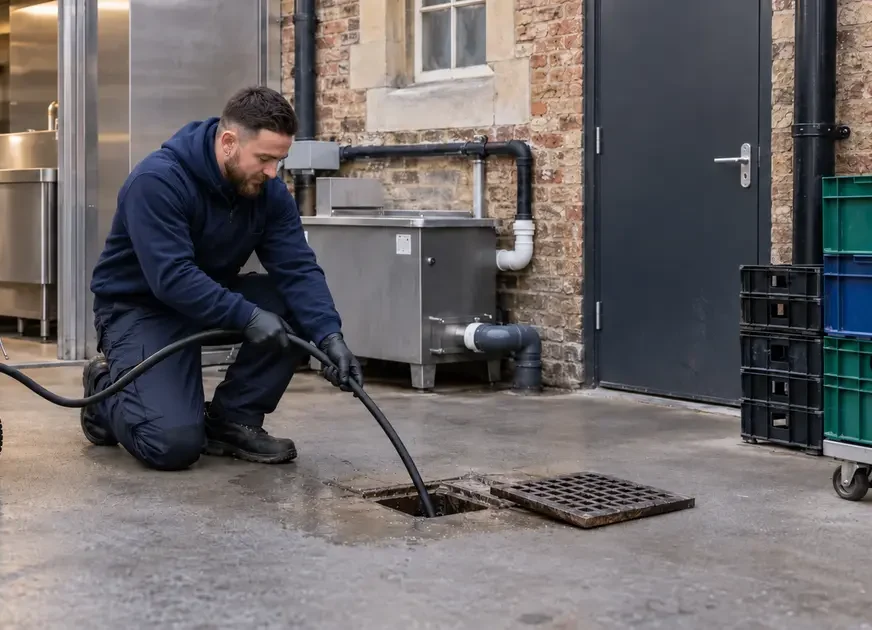
Next, the engineer chooses a safe access point. Drain rods may clear some simple, local faults. However, commercial drains often need high-pressure water jetting because grease, scale, silt and compacted waste can coat a longer section of pipe.
Jetting must suit the pipe condition. Excess pressure or the wrong nozzle can harm weak, badly joined or damaged drains. Therefore, the engineer should consider the pipe material, route and likely fault before starting.
After removing the blockage, the engineer should test the flow from relevant fixtures and access points. This final check matters on shared systems because one cleared chamber does not always prove that every branch works.
You can read more about the core drain-unblocking service in Salisbury.
When does the site need a CCTV drain survey?
Not every one-off blockage needs a camera. If clearance removes an obvious soft blockage and the drain then carries a full test flow, further work may add little value.
However, a CCTV drain survey in Salisbury can help when:
- The same pipe blocks repeatedly.
- The engineer removes roots, pipe fragments or unusual amounts of silt.
- Water remains high after the first blockage has gone.
- Several units lose flow without a clear cause.
- Staff do not know the route of the shared drain.
- A landlord, centre manager or insurer needs a record of the pipe condition.
- The site plans a kitchen refit or change in wastewater demand.
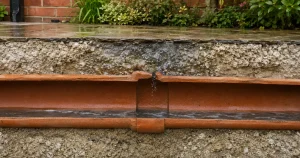
The camera may reveal a cracked pipe, open joint, displaced connection, heavy scale or a low section that holds waste. If the survey confirms damage, the next step may involve a local patch, lining or excavation. The Salisbury drain-repair service explains the main repair options.
Restaurant and café blockages: grease needs proper control
Food businesses face one of the clearest commercial drainage risks. Warm fat may leave a sink as a liquid, but it cools and sticks to the inside of the pipe. Food particles and other waste then catch on that layer until the space for water becomes too small.
Wessex Water’s grease-management advice for food businesses identifies fat, oil and grease from commercial kitchens as a major cause of blockages. Government pollution-prevention guidance for businesses also tells food businesses to keep fat, oil, grease and solids out of drains and to use suitable fat and sediment controls where needed.
Practical controls include:
- Scraping plates and pans before washing.
- Using sink strainers to catch food pieces.
- Keeping used cooking oil in suitable containers for collection.
- Emptying and servicing grease equipment at the right interval.
- Training every shift, including temporary staff.
- Recording recurring slow flow before it becomes a full blockage.
A grease trap or management unit only works when it suits the kitchen and staff look after it. Installing one and then leaving it full simply moves the blockage point.
Commercial drain unblocking in Salisbury shopping centres and shared sites
At a shopping centre or multi-let building, the first overflowing toilet may not identify the responsible unit. Several tenants may connect to the same stack or underground run, while the relevant access cover may sit in a service corridor or loading area.
The person arranging the call should try to confirm:
- Which units or facilities have lost drainage.
- Whether the problem affects public and staff toilets.
- Which contractor can access locked service areas.
- Whether a landlord or managing agent controls the shared pipe.
- Where previous blockages occurred.
- What trading hours offer the safest access.
This information helps the drainage team limit disruption. It also creates a clearer record if the landlord and tenant later need to review responsibility under the lease.
Who is responsible for a blocked commercial drain?
The answer depends on the pipe rather than the type of business.
A business, property owner or landlord will usually arrange work on private drainage that serves the premises. Wessex Water normally handles public sewers and many shared sewers outside private responsibility. Its sewer-pipe responsibility guide explains the general boundary.
Commercial leases can divide repair and maintenance costs in different ways. Therefore, tenants and landlords should check the lease and avoid assuming that the person who reports the blockage must always pay for it. A drainage report can record where the engineer found the fault, but it does not decide a legal dispute.
If several properties have backed up or the fault appears to sit on the public sewer, contact Wessex Water. For a private blockage, arrange a suitable drainage contractor.
When does emergency clearance become a repair job?
Drain unblocking restores flow. It does not rebuild a broken pipe.
Ask for a closer check when:
- The same drain blocks again after a short period.
- Jetting removes pieces of pipe or repeated heavy silt.
- Roots return at the same position.
- The ground or paving has started to sink.
- A chamber wall has cracked or a connection has opened.
- The camera cannot pass a crushed or badly misshapen section.
In these cases, repeated clearance may keep buying time without removing the cause. A targeted repair can offer better value and reduce the chance of another trading interruption.
Build a sensible plan after the blockage
Once the site runs normally, record what happened. Note the affected fixtures, access point, cause, clearance method and any camera findings. Keep useful photographs or video with the building’s service records.
Then base future cleaning on evidence. A busy commercial kitchen may need planned grease checks, while a lightly used office may only need action when flow changes. Fixed cleaning visits should reflect the site’s actual waste, pipe layout and blockage history.
Our guide to business drain maintenance in Salisbury covers the planned side in more detail. For retail and office sites with outside drainage, see our separate guide to preventing commercial car-park flooding.
Book commercial drain unblocking in Salisbury
Salisbury Drains24 supports restaurants, cafés, pubs, shops, offices, managed buildings and other business premises across Salisbury and nearby areas. The team can clear blockages, test flow, carry out CCTV checks and advise when a confirmed pipe fault needs repair.
When you call, explain what has stopped working, whether wastewater has escaped, how many units the problem affects and when the team can access the relevant area.
For commercial bookings and advice, call 01722 703565. For an urgent blockage that threatens the premises or trading, call 07511 181 177.
Frequently asked questions
Do you provide commercial drain unblocking in Salisbury for restaurants and cafés?
Yes. Salisbury Drains24 handles commercial blockages for food businesses and other premises. When calling, explain which fixtures have failed, whether grease may be involved and whether wastewater has reached a food or customer area.
Can a restaurant stay open with a blocked drain?
That depends on the affected area and whether the business can keep food, staff and customers safe. Stop using the blocked drainage at once. If wastewater has reached a food room, isolate the area and follow your food-safety controls before preparing or serving food there.
Can you clear a shared drain serving several shops?
Yes, provided the team can reach the relevant private drainage and has authority to work there. The site contact should tell nearby tenants or the managing agent and arrange access to service areas or chambers.
Does every commercial blockage need high-pressure jetting?
No. The best method depends on the blockage, pipe and access. Some small local faults respond to rodding, while grease, scale, silt or compacted waste may need careful water jetting.
Will we need a CCTV survey after unblocking?
Not always. A camera check makes more sense when the blockage returns, the engineer finds roots or silt, the pipe may have damage, or the site needs a record of a shared drainage run.
Who pays for a blockage in a rented commercial unit?
Responsibility depends on the pipe location, the cause and the lease. The tenant, landlord or managing agent should check the agreement. Wessex Water normally handles faults on the public sewer, while private drainage remains the property side’s responsibility.
How can a commercial kitchen reduce grease blockages?
Keep fat, oil, grease and food scraps out of sinks and floor drains. Scrape plates, use strainers, store used oil for collection and service grease equipment before it fills. Make the process part of every shift’s routine.