A drain smell in Salisbury homes can come from something as simple as a dry trap beneath an unused sink. However, it can also warn of a partial blockage, a loose toilet seal or a fault in the underground drainage.
The location and timing of the odour provide useful clues. A smell from one basin points towards a local fitting. A smell that appears when the washing machine empties may involve the waste connection or a restricted pipe. If several rooms smell at once, the problem may sit farther along the system.
This guide explains how to narrow down the source without taking unsafe risks. It also shows when cleaning a fitting may be enough, when the drain needs unblocking and when an engineer may recommend a closer inspection.
The short answer
Tracing a drain smell in Salisbury homes starts with its range and timing. Start by working out whether the smell affects:
- One plughole, appliance or toilet.
- One bathroom, utility room or kitchen.
- Several fittings across the house.
- An outside gully or inspection chamber.
- Your home and neighbouring properties.
Then note when it happens. Does the smell follow heavy rain, a toilet flush or an appliance cycle? Does it return after you run water into an unused fitting? These details help separate a simple water-seal problem from a blockage or damaged drain.
If water drains slowly, a toilet level changes, a plughole gurgles or an outside gully rises, stop adding unnecessary water and arrange drain unblocking in Salisbury. Do not keep masking the smell while the drainage symptoms become worse.
Safety first: could the smell be gas?
People sometimes describe both gas and drain odours as sulphurous or like rotten eggs. If you are not certain that the smell comes from a drain, treat it as a possible gas leak. Open doors and windows, turn off the gas at the meter if it is safe, avoid electrical switches and naked flames, and call the National Gas Emergency Service on 0800 111 999. Follow SGN’s gas-safety guidance rather than trying to find the source yourself.
What should stop foul air entering a home?
Sinks, showers, baths, floor drains and toilets use water seals to separate indoor air from the drainage system. For example, the curved trap under a sink holds a small amount of water after the tap stops. As a result, foul air cannot move back through the waste pipe.
The drainage system also needs suitable ventilation. When water travels down a pipe, it changes the air pressure around it. Good pipe design allows that air to move without pulling water out of nearby traps.
The government’s Approved Document H on drainage and waste disposal sets out the principles. Foul drainage should prevent foul air entering the building, limit blockage and leakage risks, provide ventilation and remain accessible for clearing.
If a trap dries out, loses its seal or connects to a restricted pipe, the barrier can fail. Therefore, the smell may enter through a fitting even though that fitting is not itself blocked.
Trace the drain smell before trying a remedy
A few observations can make the next step much clearer. A drain smell in Salisbury homes often follows a pattern, even when it first seems random. Avoid pouring products into every plughole at once because that makes it harder to tell which action changed the smell.
| Smell pattern | Possible cause | Safe first check | When to arrange help |
|---|---|---|---|
| One little-used sink, shower or floor drain | Dry water trap | Run clean water for 20–30 seconds and check later | The smell returns even though the trap contains water |
| One kitchen sink smells, especially after use | Food residue, dirty overflow or restricted waste pipe | Clean the strainer, overflow and removable trap if safely accessible | Flow is slow, the pipe leaks or the smell returns quickly |
| One toilet smells around its base | Failed seal, loose connection or nearby leak | Check for movement, staining or dampness without removing the toilet | The toilet rocks, leaks or smells after flushing |
| Several fixtures gurgle or drain slowly | Partial blockage or ventilation problem | Stop high-volume appliance use and note which fixture reacts first | More than one fitting is affected or water levels rise |
| Smell appears when a washing machine or dishwasher empties | Poor waste connection, dirty standpipe or restricted branch | Check the visible hose and standpipe for leaks or obvious fouling | Water backs up, bubbles in another fitting or escapes |
| Outside gully smells and holds dirty water | Debris, grease, silt or a downstream blockage | Remove only loose surface debris that is safe to reach | Water remains high or rises when indoor fittings run |
| Whole house smells after rain | Surcharged drainage, open chamber, lost trap seal or pipe defect | Check visible traps and note any outside high water | The smell recurs with rain, chambers rise or several fittings react |
| Neighbours report the same problem | Shared drain or public sewer issue | Compare when symptoms began and which properties are affected | Contact the appropriate drainage contractor or sewerage company |
The table shows likely starting points, not a diagnosis. More than one fault can produce a drain smell in Salisbury homes, so consider all the symptoms together.
Common causes of a drain smell in Salisbury homes
1. A dirty plughole, overflow or waste fitting
Organic residue can collect around a kitchen sink strainer, basin overflow, shower channel or bath waste. Bacteria then break down the film and release an unpleasant smell. The fitting may still drain at a normal speed.
When a drain smell in Salisbury homes stays close to one plughole, surface cleaning is a sensible first check.
First, clean the accessible surfaces with hot water and ordinary household detergent. Next, remove hair from a shower cover and clean a sink overflow with a suitable small brush. Finally, follow the fitting manufacturer’s instructions, especially on plated or stone surfaces.
If the smell disappears after cleaning and the water continues to flow freely, the issue may have been local. If it returns within a day or two, check the trap and pipework instead of repeatedly adding fragrance or strong chemicals.
2. A dry trap in a little-used room
Water slowly evaporates from an unused trap. This often affects a spare bathroom, utility sink, shower room or floor drain that sees little use. It may also happen after a property has stood empty.
Run clean water into the fitting and wait. If the smell fades and stays away, the water seal was the likely cause. Continue to use the fitting periodically.
If the trap dries unusually quickly, look for a leak beneath it. Also, a pressure problem may be pulling the water seal out when another appliance discharges. In that case, refilling it treats the symptom but not the cause.
3. A loose, leaking or poorly fitted trap
A plastic sink trap can loosen after items stored in a cupboard knock it. A joint may also leak slowly enough to leave residue without creating an obvious puddle.
Look for staining, dampness and a ring of dried waste around the joints. Do not dismantle pipework unless you know how to reassemble and test it correctly. A small gap on the foul side of the trap can release odour whenever pressure changes in the pipe.
4. A failed toilet seal or connection
A toilet should not release a drain smell around its base. A failed pan connector, movement in the toilet or a concealed leak may allow foul air into the room. Sometimes the odour becomes stronger just after flushing.
Do not seal around the base as a first response. Instead, check whether the toilet moves or shows dampness. Silicone may hide a leak without repairing the connection behind it. If the smell persists, ask a competent plumber or drainage engineer to inspect the fitting.
5. A partial blockage
A drain does not need to stop completely before it smells. Grease, soap, food, hair, wipes or scale can narrow the pipe and hold wastewater. The trapped material breaks down, while restricted flow pushes stale air back through the easiest opening.
A drain smell in Salisbury homes becomes more likely to involve a blockage when it appears alongside slow flow or changing water levels.
Look for a combination of symptoms:
- Water takes longer to leave the sink, bath or shower.
- A nearby fitting bubbles when the toilet flushes.
- The water level in a toilet changes without use.
- An outside gully rises during appliance discharge.
- The smell returns soon after cleaning the fitting.
Our guides to gurgling drains in Salisbury homes and a slow-draining sink in Salisbury explain those warning signs in more detail.
6. Poor drainage ventilation or pressure changes
Wastewater moving through a pipe pushes and pulls air. If the system lacks effective ventilation, or if a vent is obstructed, the pressure change can disturb a nearby trap. As a result, you may hear a gulp or gurgle before the smell appears.
Altered bathrooms, new appliances and changed pipe routes can sometimes expose a layout problem that did not show under lighter use. However, the noise alone does not prove that the vent is at fault. A partial blockage can create similar pressure changes, so the engineer needs to check flow as well as pipe arrangement.
7. A blocked or dirty outside gully
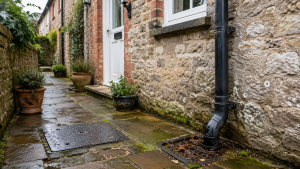
An outside gully receives wastewater from fittings such as a kitchen sink, washing machine or utility room. Leaves, silt, food residue and fat may collect at the top or in the trap. If the downstream drain is restricted, dirty water can remain visible or rise during use.
An outside gully can therefore be the first place where a drain smell in Salisbury homes becomes noticeable.
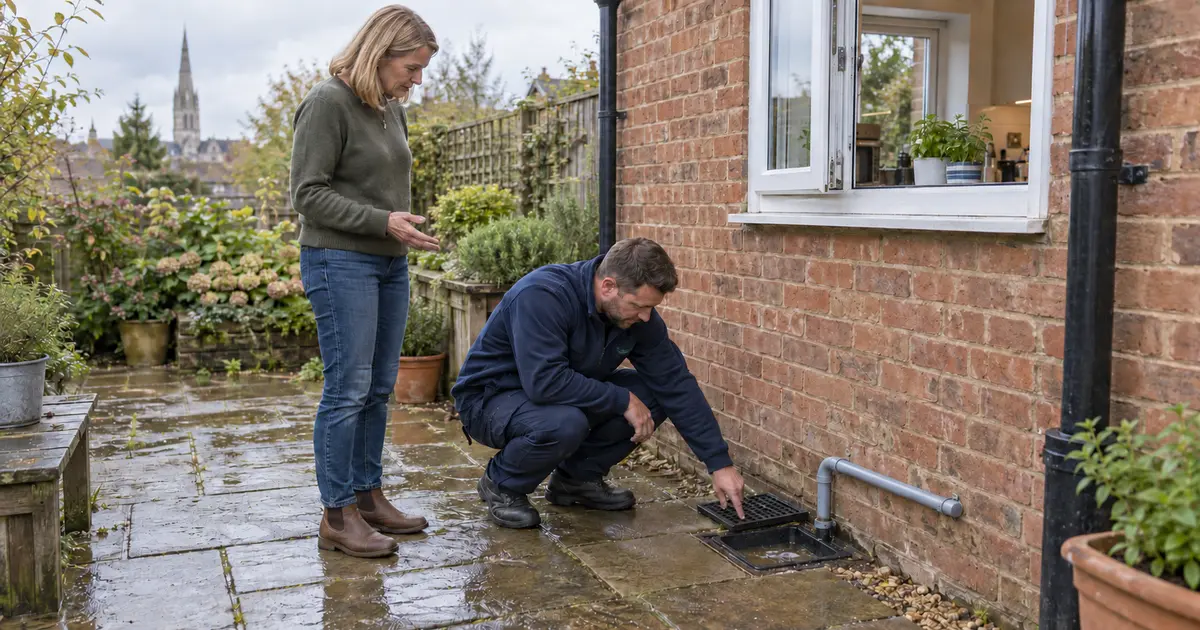
Remove loose leaves from the grate if you can do so without contact with wastewater. Do not reach into a deep gully or lift a heavy chamber cover. If water stands high, arrange an inspection. The separate guide to a blocked outdoor drain in Salisbury covers this situation step by step.
8. A damaged pipe, displaced joint or hidden leak
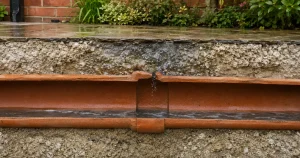
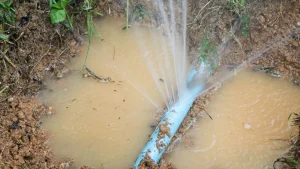
Cracked pipes and open joints can let wastewater escape and allow odour to travel through the surrounding ground. The smell may enter through a suspended floor, service duct, damaged chamber or gap around a pipe.
Damage is only one possible cause of a drain smell in Salisbury homes, so the pipe condition should be confirmed before anyone proposes a repair.
Other evidence might include recurring blockages, damp ground, local settlement, rats or unexplained silt inside the drain. However, none of these signs proves a break on its own. Once the drain is clear, a CCTV drain survey can inspect the pipe and record the position of a confirmed defect.
9. An old interceptor or Buchan trap
Some older properties have an interceptor trap between the private drainage and the sewer. It was designed to form a water seal, but the bend and inspection eye can catch waste or silt. A missing cap or lost seal may also release odour.
Salisbury has period properties as well as newer housing, but the age of a home does not prove that it has an interceptor. An engineer should identify the fitting before recommending removal or alteration. Read more about interceptor and Buchan traps.
10. A shared drain or sewer issue
If several homes develop the same smell, slow flow or rising chambers, the cause may sit beyond one property’s branch drain. Ask neighbours whether they have noticed a change, but do not assume ownership from the position of the smell.
Responsibility depends on where the fault sits and which properties the pipe serves. Therefore, establish the affected route before deciding whom to contact. Our guide to private and shared drains in Salisbury explains the general distinction. The relevant sewerage company may need to investigate a public sewer problem.
Why does the smell become worse after rain?
Rain does not automatically mean rainwater has entered the foul drain. However, wet weather can expose an existing weakness.
When a drain smell in Salisbury homes follows rain, the exact timing is especially useful evidence.
Possible reasons include:
- Water running into an incorrectly connected or damaged foul system.
- High levels in a shared drain or sewer displacing air towards the house.
- A cracked chamber or pipe allowing groundwater to enter.
- A loose cover or unsealed opening releasing odour as pressure changes.
- A trap that loses its water seal when several flows reach the system.
First, write down whether the smell begins during rain, immediately afterwards or only when you use an indoor fitting. Also note any high water in gullies or chambers. A pattern across two or three wet-weather events gives an engineer better evidence than the description “it smells when it rains”.
If the drain also carries unusual clear water long after rainfall, read our guide to groundwater entering Salisbury drains.
Why does it smell when the washing machine or dishwasher empties?
An appliance releases a relatively large volume of water in a short time. That flow can reveal a restricted branch pipe, a poor hose connection or a trap that loses its seal.
For this reason, an appliance-triggered drain smell in Salisbury homes deserves a check of both the visible connection and the downstream flow.
Next, watch and listen from a safe position while the appliance pumps out. Does a nearby sink gurgle? Does the outside gully rise? Does water appear around the standpipe? These clues show where the pressure or restriction becomes visible.
Do not keep running test cycles if water backs up. Stop the appliance and arrange help before the discharge escapes into the room.
Safe checks to make before calling
You can gather useful information without opening the drainage system.
These simple checks help describe a drain smell in Salisbury homes accurately when you arrange a visit.
- Confirm the strongest location. Close internal doors briefly, then compare the kitchen, bathrooms, utility room and any accessible outside gully.
- Check every visible water seal. Run water into unused sinks, baths and showers. Flush little-used toilets once if they operate normally.
- Test one fitting at a time. Note whether another plughole bubbles or an outside gully rises. Stop immediately if water backs up.
- Clean accessible surfaces. Wash plugholes, strainers, overflows and removable covers with ordinary detergent.
- Look beneath sinks. Check for damp joints, residue or a trap that has been knocked out of line.
- Note the timing. Record links with rain, flushing, heating coming on, appliance use or an empty property.
- Ask whether neighbours are affected. This is especially useful in terraces, flats and homes with shared drainage routes.
- Keep previous records ready. A drain plan, repair invoice or earlier survey can prevent duplicate investigation.
These checks should not involve entering a chamber, reaching into wastewater, climbing onto a roof or dismantling a toilet.
What not to do with a smelly drain
Avoid remedies that can hide the problem or make the visit less safe.
A persistent drain smell in Salisbury homes needs a source-based check rather than repeated masking.
- Do not mix drain cleaners. Different products can react and release dangerous fumes.
- Do not keep adding caustic cleaner. It may remain in a blocked pipe and expose whoever opens it later.
- Do not pour fat or boiling water into plastic waste pipes. Fat causes deposits, while very hot water can affect some fittings and seals.
- Do not lift a heavy or sealed chamber cover without the right tools. Covers can fall, pinch fingers or expose contaminated water.
- Do not enter a manhole or confined space. Dangerous gases and low oxygen may be present.
- Do not assume an air freshener has solved it. A persistent odour needs a source, not a stronger fragrance.
If you have already used a chemical product, tell the engineer what it was and when you used it.
How a drainage engineer investigates the smell
A useful investigation starts with the pattern rather than the camera.
The engineer may:
- Ask which fitting smelled first and what was running at the time.
- Check traps, visible connections and signs of leakage.
- Test flow from selected fixtures while watching an outside access point.
- Check whether water stands high in a gully or chamber.
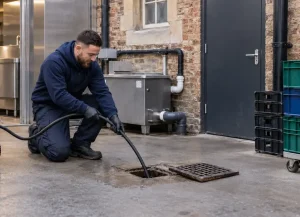
- Clear any blockage and test the pipe again.
- Inspect the drain with a camera if symptoms suggest hidden damage or the smell keeps returning.
Not every drain smell in Salisbury homes needs a CCTV survey. A dry trap or loose sink connection may be visible without one. A camera becomes more useful after flow has been restored, particularly when the property has recurring blockages, root entry, displaced joints or unexplained silt.
In more difficult cases, a specialist may use controlled tracing or smoke testing to find an open connection. The chosen test should match the building and the suspected route.
Does the drain need clearing or repairing?
The finding determines the remedy.
| Finding | Likely next step |
|---|---|
| Dirty local fitting with normal flow | Clean the fitting and monitor it |
| Dry but sound trap | Refill it and use the fitting periodically |
| Loose trap, failed pan seal or appliance connection | Repair or replace the local fitting |
| Soft blockage with sound pipework | Clear the pipe and confirm full flow |
| Recurring blockage with scale or roots | Clean the drain, then inspect the affected section |
| Cracked pipe, open joint or collapsed section | Plan a targeted drain repair in Salisbury |
| Shared or public sewer fault | Refer the evidence to the responsible party |
Repeated unblocking is not a repair for a broken pipe. Equally, one smell does not justify excavation without evidence. Therefore, the aim is to match the work to the confirmed cause.
Drain smells in rented homes and shared buildings
Tenants should report a persistent smell early and explain which fittings are affected. Include photographs of leaks or rising water, but do not photograph contaminated areas at close range if that creates a contact risk.
A drain smell in Salisbury homes with several flats or tenants may need coordinated access because the affected pipe can pass through a shared area.
Meanwhile, landlords or managing agents should arrange access to shared areas and provide any previous drainage reports. In a converted building, symptoms in one flat may relate to a common stack or underground run, so ask other occupants about slow flow and gurgling.
The drainage report can state where the fault was found and what work took place. Responsibility for the cost may depend on the tenancy, lease, pipe location and cause.
When is a drain smell urgent?
Arrange prompt help when:
- Sewage or dirty water enters the house.
- A toilet, shower or gully begins to rise.
- Several fittings stop draining.
- The smell is strong across several rooms and does not clear with ventilation.
- A child, older person or vulnerable occupant could contact wastewater.
- The drain backs up near food preparation or electrical equipment.
- The smell returns after every rainfall or appliance discharge.
- You suspect gas or cannot identify the smell safely.
Treat a drain smell in Salisbury homes as urgent when it comes with rising wastewater, widespread loss of flow or uncertainty about gas.
For a possible gas leak, leave drain checks aside and follow the gas-emergency advice above.
Local drain-smell checks across Salisbury
The same symptom can have different causes in a city-centre terrace, an older home in Harnham, a converted building near Fisherton or a newer property around Old Sarum or Laverstock. Property age may guide the questions, but it should not replace inspection.
That is why a drain smell in Salisbury homes should be assessed from the symptoms and pipe route, not from the postcode or building age alone.
For example, an older home may have clay pipes, altered gullies or an interceptor. Meanwhile, a remodelled property may have long appliance connections or a little-used en-suite. However, a newer home can still develop a local blockage, loose trap or construction defect.
When booking, describe the property type, affected rooms, recent alterations and any connection with rain or appliance use. Those details help the engineer bring the right equipment and choose the first access point.
Book a drain-smell investigation in Salisbury
If simple cleaning and refilling a trap do not solve the problem, Salisbury Drains24 can trace the drainage symptoms, clear a blockage and advise whether the pipe needs further inspection or repair.
Giving a clear history of the drain smell in Salisbury homes helps the engineer test the most likely route first.
When you call, explain:
- Where the smell is strongest.
- Which fixtures drain slowly or gurgle.
- Whether the problem changes after rain.
- Whether an appliance or toilet triggers it.
- Whether outside water levels rise.
- Whether neighbours have similar symptoms.
- Which cleaning products you have used.
For bookings and advice, call 01722 703565. For an urgent blockage or wastewater backup, call 07511 181 177.
Frequently asked questions
Why does my drain smell even though it is not blocked?
A dry trap, dirty overflow, loose waste joint, failed toilet seal or pressure problem can release odour while water still drains. Clean the accessible fitting, check that its trap contains water and watch for leaks or gurgling. Arrange an inspection if the smell returns.
Why does the drain smell get worse after rain?
Wet weather can raise water levels, displace air or reveal groundwater entering a damaged drain. It can also expose a loose chamber cover or connection. Note the timing and any high water in gullies or chambers so an engineer can test the correct part of the system.
Can a dry trap cause a sewage smell in the house?
Yes. The water held in a trap blocks foul air from the drainage system. If an unused trap evaporates dry, run clean water into the fitting. If the smell soon returns, check for a leak or a pressure problem that may be removing the water seal.
Will drain cleaner remove a bad smell?
It may shift light residue in a local waste fitting, but it will not repair a loose seal, ventilation fault or broken underground pipe. Never mix products. If water drains slowly or backs up, stop adding chemicals and tell the engineer what you have used.
Does every drain smell in Salisbury homes need a CCTV survey?
No. An engineer can often identify a dry trap, dirty fitting or loose connection without a camera. CCTV is more useful when the smell recurs, several fittings are affected or evidence suggests roots, displaced joints, cracks or another underground fault.
Who is responsible for a smell from a shared drain?
Responsibility depends on where the fault sits and which properties the pipe serves. A private branch may belong to one property, while a shared or public sewer may fall elsewhere. Establish the location first, then refer to the relevant ownership guidance, tenancy or lease.
Is a rotten-egg smell always caused by a drain?
No. Gas and drainage odours can be confused. If you are unsure, treat the smell as a possible gas leak: ventilate, avoid flames and electrical switches, and call the National Gas Emergency Service on 0800 111 999.